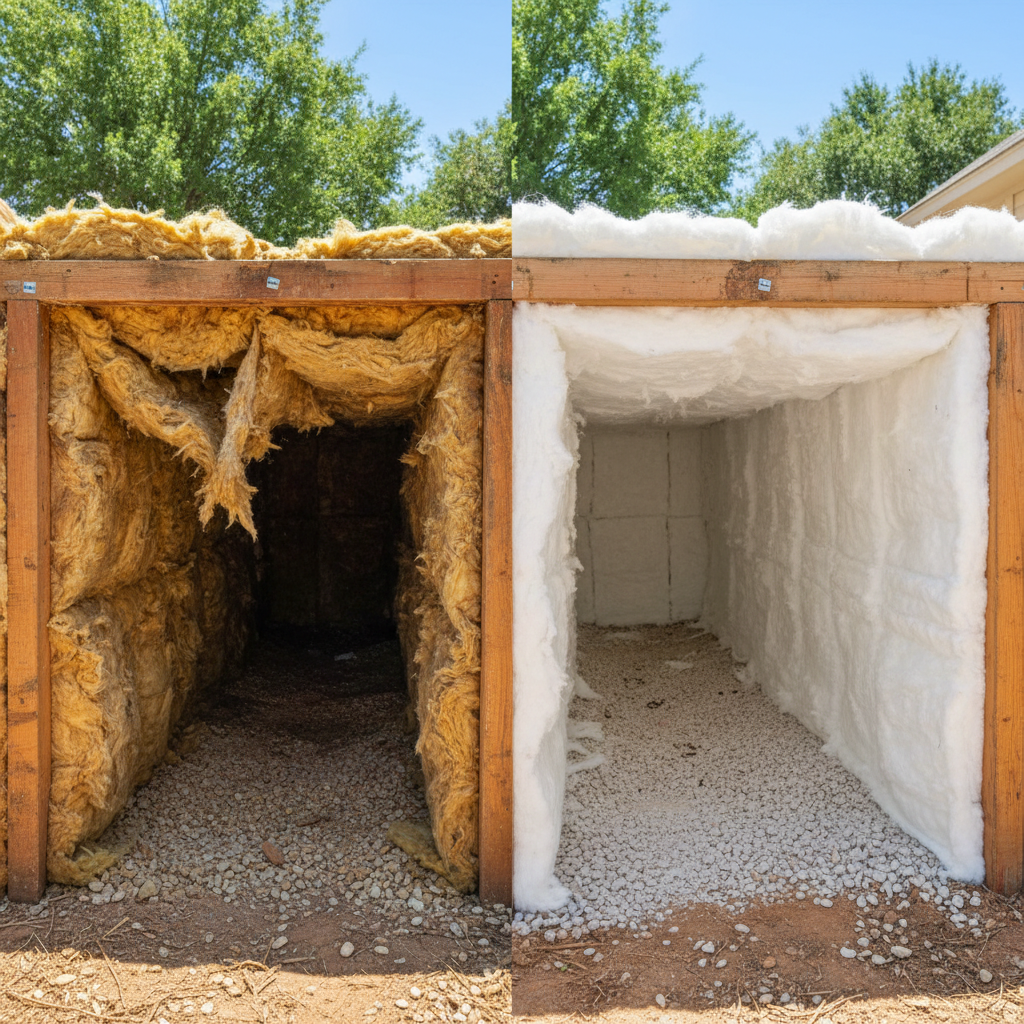
Your crawl space. It's probably not where you spend your evenings, but what's going on down there has a big impact on your whole house. Especially when it comes to insulation. I see a lot of folks in Mansfield trying to figure out the best way to insulate their crawl space, and two options come up a lot: traditional fiberglass batts and rigid foam boards. Let's talk about what I've learned working with both.
Fiberglass Batts: The Old Standby
Fiberglass batts are what most people picture when you say "insulation." They're those fluffy rolls or sheets, usually pink or yellow. They've been around forever, and for good reason: they're cheap, and they do insulate. You can pick them up at any home improvement store.
Here's the deal with batts in a crawl space, especially in a place like Mansfield where we get that crazy humidity and sometimes heavy rains that can make the ground soggy. Batts work by trapping air. That's how they slow down heat transfer. But if they get wet, they lose almost all their insulating power. And boy, do they love to get wet in a crawl space. Whether it's from condensation, a small leak, or just the high humidity we get most of the year, those batts can soak it right up.
Once they're wet, they sag. They pull away from the floor joists, leaving gaps. Those gaps are like open doors for air to move freely, completely defeating the purpose of insulation. Plus, wet fiberglass is a prime spot for mold and mildew. I've pulled out countless soggy, moldy batts from homes in neighborhoods like Country Club Estates, and it's never a pretty sight. The cost might be low upfront, but the long-term performance and potential for issues often make them a false economy.
Rigid Foam Boards: A Modern Solution
Now, let's talk about rigid foam boards. These are sheets of foam, usually polystyrene (XPS or EPS) or polyisocyanurate. They're denser, firmer, and they don't look like cotton candy. We often use them for crawl space walls and sometimes under the subfloor.
The biggest advantage of rigid foam, especially here in Texas, is its resistance to moisture. It doesn't absorb water like fiberglass does. So, if you get some humidity or even a small amount of water in your crawl space, the foam isn't going to turn into a sponge. It'll keep its R-value, which is its insulating power, even in damp conditions. That's a huge plus for durability and maintaining performance over time.
Installation is a bit different. You cut the boards to fit snugly against the crawl space walls or subfloor, then seal the seams with tape or caulk. This creates a much tighter, more continuous thermal barrier than you'd ever get with batts. When Apex Insulation installs these, we make sure those seams are sealed tight. That sealing also helps with air leakage, which is a major source of energy waste.
Another benefit? Pests don't find rigid foam as appealing as they do fiberglass. Rodents sometimes tunnel through fiberglass, and insects can nest in it. Foam is a tougher barrier. It's not completely pest-proof, but it's a lot less inviting.
Cost, Durability, and Maintenance
Okay, let's get down to brass tacks. Upfront, fiberglass batts are cheaper. There's no getting around that. If you're just looking at the sticker price, batts win.
But when you consider durability and maintenance, rigid foam pulls ahead. Fiberglass batts often need to be replaced after a few years if they get wet or sag. That's not just the cost of new material, it's the labor to remove the old stuff and install the new. Rigid foam, installed correctly, can last the lifetime of your home without losing its effectiveness or needing significant maintenance. You might need to check the seals every few years, but that's about it.
Appearance? Well, it's a crawl space, so who's really looking? But if you want a clean, professional look, rigid foam boards give you that. No sagging, no messy fibers. It just looks solid and well-done.
My Recommendation for Mansfield Homes
For crawl spaces in Mansfield, TX, I'm going to lean heavily towards rigid foam boards. Yes, the initial cost is higher. But the long-term benefits in terms of performance, durability, and moisture resistance far outweigh that extra expense. Our clay soils here mean we often deal with moisture issues, and that's where batts really fail.
You'll get a more consistent temperature in your home, lower energy bills because the insulation isn't failing, and you'll reduce the risk of mold and mildew in that space. It's an investment that pays off over time, keeping your home more comfortable and healthier. Don't cheap out on your crawl space; it's too important for your home's overall health and efficiency.