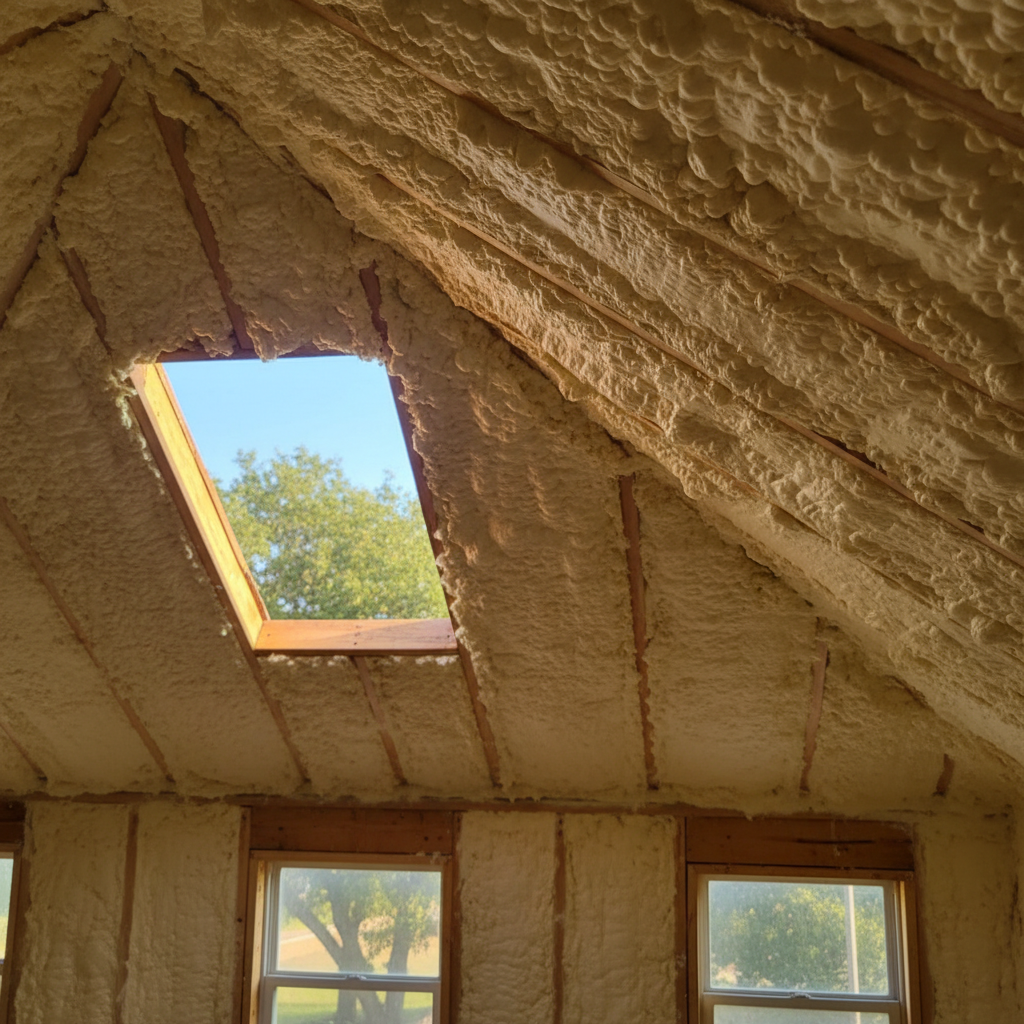
Alright, let's talk about closed cell spray foam. You've probably heard the buzz, seen the ads, maybe even watched a few YouTube videos. It's a fantastic product, no doubt about it, especially for homes right here in Mansfield, Texas. But before you go spraying it everywhere or hiring just anyone, you need to understand a few things. This isn't like painting a wall; it's a serious upgrade to your home's envelope.
Before You Even Think About Spraying
First off, what are you trying to achieve? Are you battling sky-high AC bills in July? Got a drafty old house near the historic district that just won't hold heat in winter? Or maybe you're finishing out a garage or a new addition. Closed cell spray foam is incredibly dense and rigid. It's not just an insulator; it's a vapor barrier, an air barrier, and it adds structural integrity. That's a big deal. It means you can often skip separate vapor barriers, and it's fantastic for places where you need a lot of R-value in a small space, like rim joists or cathedral ceilings.
You need to figure out where you want it. Attics, crawl spaces, exterior walls – these are common spots. If it's an attic, is it vented or unvented? Closed cell is perfect for unvented attics, sealing the roof deck and bringing your ductwork inside the conditioned space. That's a game-changer for energy efficiency around here, especially with our long, brutal summers. But if you've got a vented attic, you might be looking at a different strategy, or converting it to unvented, which is a bigger job.
This isn't really a DIY job for most homeowners. I'm not saying you can't learn, but the equipment is expensive, the chemicals are hazardous if not handled right, and the application requires a lot of skill to get a consistent, effective seal. You mess this up, and you've got a big, expensive problem on your hands. Think about the prep work: clearing the area, protecting surfaces, ensuring proper ventilation. It's a lot. For small, very specific areas, maybe, but for a whole attic or walls? Call a pro. Seriously.
During the Project: What to Expect
So, you've decided to hire someone (good call). What should you expect when the crew shows up? First, they should be protecting everything. We're talking plastic sheeting over windows, doors, floors, anything that isn't getting sprayed. Overspray is a real thing, and it's a nightmare to clean up once it hardens. Make sure they're using proper safety gear: respirators, full body suits, gloves. The chemicals are reactive and you don't want to be breathing that in.
The foam itself comes out as a liquid that expands and hardens quickly. It's loud, it's a bit smelly for a while, and it's fascinating to watch if you're into that sort of thing. A good crew will apply it evenly, making sure they hit all the nooks and crannies. They're looking for a consistent thickness, usually 2-3 inches for closed cell in our climate to get that air and vapor barrier benefit. Don't be afraid to ask questions while they're working, but stay out of their way. This stuff sets up fast, so they need to move efficiently.
Ventilation is key during and immediately after. Most pros will tell you to stay out of the house for at least 24 hours, sometimes longer, to let the off-gassing dissipate. This is non-negotiable. You don't want to be breathing those fumes. We always make sure our Apex Insulation crews communicate this clearly.
After the Spray Foam is Cured
Okay, the job's done, the smell's gone, and you're back in your house. What now? First, you should notice a difference pretty quickly. Your AC won't be running as hard, your house will feel more comfortable, and it'll be quieter. That dense foam is also a decent sound barrier. It's a noticeable change, especially if you had an older, poorly insulated home.
Check the work. Visually inspect the areas that were sprayed. Does it look consistent? Are there any obvious gaps or thin spots? It should be a uniform, hard surface. If you see anything that looks off, don't hesitate to call the contractor back. A reputable company will stand by their work.
One thing to keep in mind, especially with closed cell, is future access. Because it's so rigid, if you need to run new wires or pipes through a wall that's been sprayed, it's going to be a lot harder. Plan ahead if you're thinking about major electrical or plumbing changes down the line. It's not impossible to cut through, but it's a chore. Also, if you live in an area like the Country Club Estates where homes often have older, smaller attics, make sure any existing vents or access points are still functional or that new ones have been installed if the attic was converted to unvented.
Closed cell spray foam is a big investment, but it pays off in comfort, energy savings, and the longevity of your home. Just make sure you do your homework, understand what you're getting into, and don't try to DIY a job that's clearly meant for the pros.